
Category Archives: Informative
Michigan town can’t afford electricity anymore. Shuts off lights
Unable to pay bill, Mich. city turns off lights
Unable to pay $4 million electric bill, Michigan city turns off and removes many streetlights
Corey Williams, Associated Press, On Thursday November 3, 2011, 3:41 pm EDT
HIGHLAND PARK, Mich. (AP) — As the sun dips below the rooftops each evening, parts of this Detroit enclave turn to pitch black, the only illumination coming from a few streetlights at the end of the block or from glowing yellow yard globes.
It wasn’t always this way. But when the debt-ridden community could no longer afford its monthly electric bill, elected officials not only turned off 1,000 streetlights. They had them ripped out — bulbs, poles and all. Now nightfall cloaks most neighborhoods in inky darkness.
“How can you darken any city?” asked Victoria Dowdell, standing in the halo of a light in her front yard. “I think that was a disgrace. She said the decision endangers everyone, especially people who have to walk around at night or catch the bus.
Read full story here.
Clever Aljazeera, very clever.

NOVA: The Secrets of The Parthenon
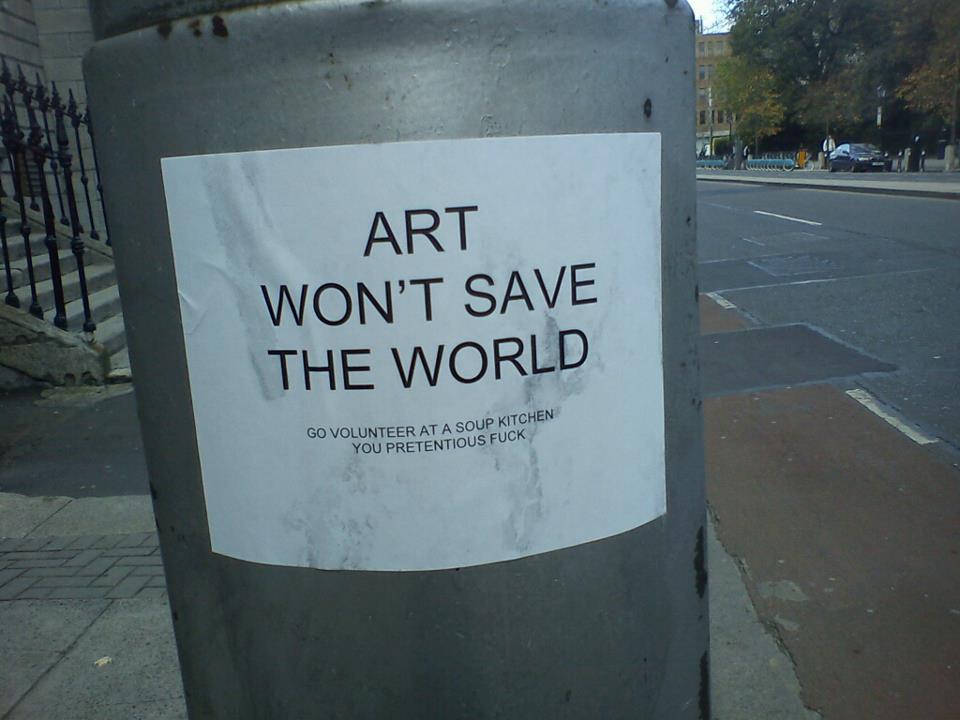
This just in: Art wont save the world
Meanwhile in America: The Second Gilded Age
Has America Become an Oligarchy?
By Thomas Schulz
At first, the outraged members of the Occupy Wall Street movement in New York were mainly met with ridicule. They didn’t seem to stand a chance and were judged incapable of going up against their adversaries, Wall Street’s bankers and financial managers, either intellectually or in terms of economic knowledge.
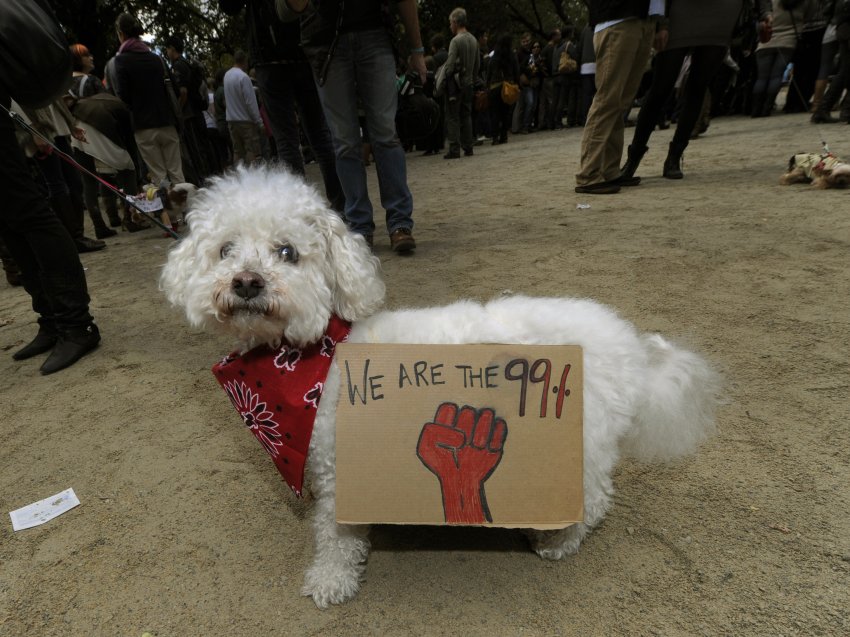
“We are the 99 percent,” is the continuing chant of the protestors, who are now in their seventh week of marching through the streets of Manhattan. And, surprisingly, they have hit upon the crux of America’s problems with precisely this sentence. Indeed, they have given shape to a development in the country that has been growing more acute for decades, one that numerous academics and experts have tried to analyze elsewhere in lengthy books and essays. It’s a development so profound and revolutionary that it has shaken the world’s most powerful nation to its core.
Inequality in America is greater than it has been in almost a century. Those fortunate enough to belong to the 1 percent, made up of the super-rich, stand on one side of the divide; the remaining 99 percent on the other. Even for a country that has always accepted opposite extremes as part of its identity, the chasm has simply grown too vast.
A New ‘Gilded Age’
In a book published in 2010, American political scientists Jacob Hacker and Paul Pierson discuss how this “hyperconcentration of economic gains at the top” also existed in the United States in the early 20th century, when industrial magnates — such as John D. Rockefeller, Andrew Carnegie and J. P. Morgan — dominated the upper stratum of society and held the country firmly in their grip for years.
Writer Mark Twain coined the phrase “the Gilded Age” to describe that period of rapid growth, a time when the dazzling exterior of American life actually concealed mass unemployment, poverty and a society ripped in two.
Economists and political scientists believe the US has entered a new Gilded Age, a period of systematic inequality dominated by a new class of super-rich. The only difference is that, this time around, the super-rich are hedge fund managers and financial magnates instead of oil and rail barons.
Read full article at: Spiegel Online
Meanwhile in Bangkok

Social Pain






How Protect IP Breaks the Internet
Anonymous: Survival Guide for Citizens in a Revolution

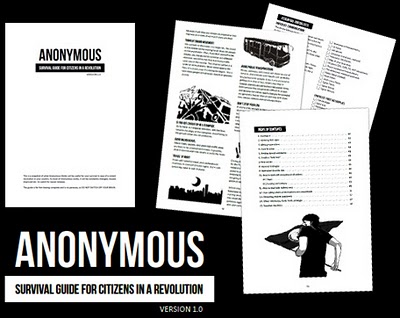
via: Anonymous Hamburg | mischief | mudkipz | lulz
Download Link: http://www.multiupload.com/1GA9HET58U
 BEARKILLERS